





Tour Trials
May 31, 2026
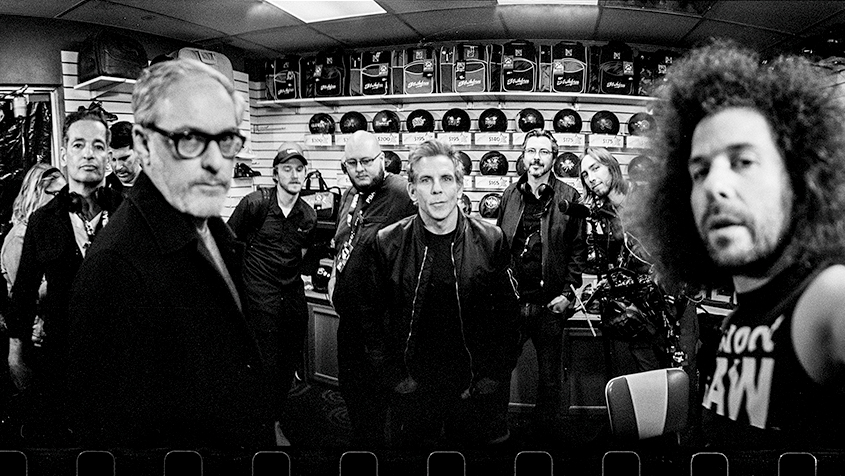
James Lee Hernandez and Brian Lazarte have a reputation for applying their unique art of storytelling to weird and quirky subject matter. From the forgotten story of the McDonald’s Monopoly game scam in “McMillions” to “The Big Conn,” the story of a small-town Kentucky attorney who defrauded the Social Security Administration of more than $550 million.
So, when the Emmy-nominated filmmakers caught wind of a documentary involving professional bowlers, the criterion of weird and quirky certainly fit the bill.
“We really love being able to pull back the curtain on something that people think they know,” Hernandez said. “All of us have some sort of connection to bowling, whether it's as small as your best friend's birthday party when you're 12 or 13 that happened at a bowling alley, whether you were in leagues, there are all sorts of connections.”
It’s those connections that Hernandez and Lazarte are depending on to drive “Born to Bowl” from quirky subculture to mainstream sports story. Hernandez, Lazarte and executive producer Ben Stiller (through his Red Hour Productions) tell the stories of PBA Tour players Kyle Troup, Anthony Simonsen, EJ Tackett, Cameron Crowe and Jason Belmonte as they take their shots to ascend to the top of the bowling world.
“We’re fascinated with unique stories that have these twists and turns,” said Lazarte. “The main thing for us was, yes, if you are a bowler, you might know those things. But how do we make this accessible to the wider world? How do you let people into this very unique niche of the sport at this level in a way that really feels fresh and engaging?”
“Born to Bowl” provides answers to those questions by offering a rare insight into that little–explored world. The five-part docuseries serves as an access point for new fans. The goal is simple — to turn casual fans into avid fans, and non-fans into casual fans.
“They're not just pro bowlers, like a pro athlete, like a major league baseball player,” said Hernandez. “Whether they win or lose, they're still a millionaire. These guys live and die by what happens on the lanes every single week.”
The PBA is hoping “Born to Bowl” will do for bowling what “Drive to Survive” and “Full Swing” has done for Formula 1 racing and golf respectively. According to the New York Times, in the first three years after Drive premiered, ESPN’s ratings nearly doubled.
With the PBA finding its footing on The CW and cementing its relationship with CBS Paramount+, the Tour is hopeful for increased viewership. It certainly helps that the last episode of “Born to Bowl” feeds into the TV finals of the PBA Tournament of Champions and leads into the World Series of Bowling.
“It was not a concerted effort but more an unintended benefit,” said PBA Tour Commissioner Tom Clark. “Compelling storytelling and personalities drive viewership, and expanded media exposure, more TV windows, and new formats grow audiences across platforms.”
“Born to Bowl” isn’t the first time bowling has received the fly-on-the-wall treatment. The best-known non-fiction film is 2004’s “A League of Ordinary Gentlemen.” Filmmaker Christopher Browne walked viewers through the 2002-2003 PBA Tour season, the first that followed after three former Microsoft executives saved the PBA from going out of business.
Before that, the not-as-glossy Pin Gods followed the 1994 PBA Winter Tour, and gave us such household names as Tony Rosamilia and Sonny Pavelchak III.
But “Born to Bowl” isn’t like the bowling documentaries before it. The glossy documentary-style treatment is broken down into five half-hour episodes, which ran Monday nights starting March 16 and are available on-demand at HBO Max.
Fro Power
The genesis for a documentary began with an idea from Jared Polin, photographer and content creator whose YouTube channel, Fro Knows Photo, boasts more than 1.5 million subscribers. He became intrigued with the YouTube channel created by PBA pros Brad Miller and Kyle Sherman.
“In one of their videos, I saw a guy named Kyle Troup, and he had a fro,” said Polin. “They even called him ‘The Pro With the Fro.’ And I’m like, ‘Wait a second. I have a fro. It’s better than yours.’”
Polin went to the 2022 Tour stop in Jackson, Michigan, to meet Troup, and interview him for his “Six Degrees” series. The series shows a day in the life of interesting people, with Polin capturing their images.
So Polin meets Troup. And then he meets Jason Belmonte, who becomes a “Six Degrees” subject. Then he meets other Tour bowlers, which officially lights the fuse for Polin’s idea.
“Just seeing what was going on behind the scenes was fascinating,” said Polin. “All I ever saw on TV when I was a kid was the stepladder finals. I never got to see anything.”
Polin says he was intrigued to learn that a handful of players can make a living by bowling, and the fact that bowlers take an enormous financial risk while trying to chase their dreams of glory.
“Seeing what these athletes are going through day in and day out, the struggles they went through, the money that they spend to try and win, and many times not succeed. I thought, ‘There's a story there.’”
When it comes to accessing the bowlers and getting the rights to produce a documentary, Polin found that it was easier to ask for forgiveness than permission.
“The hardest thing to do is to get the rights to do the documentaries,” he said. “It just doesn't happen overnight. You got to put in the work. I mean, we're going back over four years when I started the process of befriending these guys without the idea that, ‘Oh, we're going to make an HBO series.’”
Polin teamed with Alex Stevens of Blue Pixel Media and used their own money to hire cinematographer Tommy Pittenger. The 2022 USBC Masters was the event they documented to create what’s called a sizzle reel — a short, high-energy promotional video to generate excitement, grab attention, and secure funding or buy-in from investors.
An Idea Sizzles
A chance meeting with Isaac Solotaroff in 2023 at a suburban Philadelphia park led to Polin sharing his sizzle reel. Solotaroff, a documentary director, thought Polin was as crazy as his afro.
“He told me about this crazy idea he had about wanting to do for bowling what Drive to Survive did for Formula One,” said Solotaroff. “I told him bowling and Formula One have nothing in common. Formula One is all about danger and sex, you know, sexy athletes and Monaco. And bowling is none of those things. And he's like, ‘Oh, I know, I know.’”
What Solotaroff learned is that bowling has an entire subculture that is not widely publicized. His intrigue led to him sharing the reel with Mandalay Sports Media, known for their documentary “The Last Dance” about the 1998 NBA season with the Chicago Bulls. Solotaroff and Polin also received official buy-in from Bowlero Corp (now known as Lucky Strike Entertainment), who has owned the PBA Tour since 2019.
At the same time, A24 Films expressed to Mandalay that they wanted to get into documentaries. A24 is known for producing and distributing indie, art-house, and high-quality genre films, particularly in the horror and drama genres. Their best-known projects like “Everything Everywhere All at Once,” “Hereditary,” and “Moonlight,” have produced major award wins.
“They had what's called a first-book deal with A24,” explained Solotaroff. “A24 said anytime you got a project that comes through your doors that you like, we want to be the first ones to get a look at it and see if it's something that we want to work on.”
According to Solotaroff, out of the ideas that were presented to A24 by Mandalay, “Born to Bowl” was the project they responded to with positivity.
“This would seem so off-brand for them, but they just loved the subculture that we had tapped into,” he said. “I think it was the sincerity and transparency. They’re just a different breed of athlete.”
The final litmus test was three days of filming at the 2024 U.S. Open. With Troup winning the event, and a stepladder which included Tackett, Belmonte, and Simonsen, you couldn’t script a better scenario for a sizzle reel.
“So, then they came on and they brought Ben Stiller and then it took almost another year to sell the show to HBO,” Solotaroff said. “The crew started shooting at the 2025 Delaware Classic and finished at the Tournament of Champions. But it all started with Jared saying, ‘I think there's a story here.’”
The story that Hernandez and Lazarte were looking to tell was one of compelling and relatable human drama that ultimately makes for great TV. It’s about the people more than it’s about the bowling. With rare and sometimes raw access, it’s a compelling look at what’s inside something so familiar to bowling fans.
“The world of professional bowling has all these complexities to it,” said Hernandez. “These guys live and die by what happens on the lanes every single week. The idea that there's huge stakes like that and then just meeting and talking to all the people around professional bowling of how it's simultaneously a close-knit family. These guys traverse the country together and yet they still want to beat the hell out of each other. All those dynamics were just really exciting for us.”
Hernandez and Lazarte chose to use humor mixed with knowledge to spotlight the bowlers and form narratives throughout the series.
“Humor/heart is a delicate line to walk,” admitted Lazarte. “But we really wanted to bring that to the table to make it something that anybody who's ever rolled a ball down the lane would say, ‘This is cool.’ Even though I might not ever compete at that level, I can really, really appreciate that.”
A masterful job is done to explain bowling terminology without getting bogged down in the technical minutiae that could overwhelm a newcomer. Using actor Liev Schreiber in a voiceover role gives a tone that’s serious, but still playful and open.
“Our main purpose and the way we were breaking out this storytelling was to dole out the information in a way that it didn't feel like it's all hitting you in the face all at once,” said Lazarte. “Our approach is looking at being able to capture moments that felt very raw, felt authentic, felt more behind the scenes.”
For the non-bowlers, “Bowl to Win” delves into the barriers of entry to watching bowling — lane oil, the internal workings of a bowling ball, and why bowling shoes are a requirement not just a suggestion. Using images of Tetris pieces overlayed on a bowling lane was surprisingly effective in describing lane patterns.
“Though the pins never move, the path to them does, constantly augmenting the degree of difficulty and forever frustrating the bowlers.”
At one point, Schreiber tells the viewers straight up: “Sometimes these guys might say some things you’re not going to understand…. and that’s okay.”
In Review
Episode 1 attempts to put bowling on equal footing with golf, tennis and horse racing, and establishing bowling’s title of “the unofficial sport of the everyman.” It establishes early that Pete Weber and his “Who do you think you are? I am!” celebration are still the most recognized thing about the professional bowling for most non-bowlers.
There are only one or two points where hard-core bowlers might take offense. Schreiber, who also narrates HBO’s Hard Knocks series, says, “To be a professional bowler is the height of athleticism.” This is followed by a shot of Simonsen in the McDonald’s drive-thru ordering chocolate chip cookies. But more times than not, you’ll find yourself laughing with the bowlers instead of laughing at them.
“Bowling was always a punchline in many a movie,” said Solotaroff. “It's an easy sport to punch down on. I was like, ‘The one thing we are not going to do in the show is punch down.’”
The initial episode also establishes background storylines for Troup and Crowe. Troup, the 2021 Chris Schenkel Player of the Year, is highlighted as the 2025 U.S. Open defending champion trying to reclaim the top spot. Crowe, the 2020 U.S. Amateur champ, is trying to establish himself as a rookie on the PBA Tour.
“Cam was phenomenal in high school and college,” said Hernandez. “But it’s totally different when you’re playing with the big kids. He learns a lot of hard lessons in his first season.”
Crowe’s Tour roommate and fellow two-handed southpaw Keven Williams manages to steal a few scenes within the series. Along with doling out some harsh realities to Crowe, the one-time PBA titlist and part-time rapper makes a tongue-in-cheek comment about potential tour sponsors.
Episode 2 is the Simonsen show, where his ascent to the U.S. Open finals is a rollercoaster ride of expletives, attitude and bowling brilliance. Cursing out an unhelpful ball rep and sparring with tournament officials actually help Simo boost his game.
We get a front-row seat as he activates his fight-or-flight response. As Williams confirms Simonen’s full-tilt status, there is a warning: “Simo gets better when this happens.”
Episode 3 is the EJ Tacket show, where we see the four-time Player of the Year’s beginnings as a two-handed player before turning into the No.1 player on the PBA Tour. There’s a moment where the U.S. Open trophy has another malfunction. It’s not as dramatic as Pete Weber’s fumble at the 1991 Open, but a new tag line may emerge from the episode: “Uh-oh. There goes the foot!”
“The foot fell off on-set last year, and then Tripp took it off when they did the interviews at home,” said Tackett. “It’s been fixed a couple of times since it came home.”
In Episode 4, we get the backstory on Belmonte, his home life, how he’s gone for six to seven months of the year, and what effect that has on him and his family. The 15-time major champion shares glimpses of his homeland, his home center, and the farm he shares with his wife and children.
“From the very beginning, I think their intentions were just to be really authentic,” said Belmonte. “So, as long as you were okay with that, there were really no hesitations.”
Belmonte’s goal: to be the greatest to ever lace up a pair of shoes and roll a ball down a lane. And the title-match showdown between Belmonte and Tackett at the World Series of Bowling’s World Championship is worth the watch through the filmmaker’s eyes.
“That's an edge-of-your-seat nail-biter,” said Lazarte of the match. “It becomes that. That's what we're so excited about, is if you've never watched bowling, by the time you get to that head-to-head competition, you're going to be so ingrained and invested in what each of those shots means.”
The episode reveals how a player as dominant as Tackett can still be humbled and have pitfalls along the way. It shows how he lost quite a few battles at the World Series, but eventually won the war in the end.
Episode 5 sees Hernandez and Lazarte cram a lot of information into the final installment of the series. After a quick look into the USBC Masters, the story shifts to Akron, Ohio, for the Tournament of Champions. Along with Tackett’s pursuit of the single-season Triple Crown, you get to see Crowe’s visit to the LeBron James Museum for a bit of inspiration.
The episode also focuses on the end of the PBA’s TV contract with FOX. You can feel the uncertainty within the episode, and the doubt on whether the PBA Tour could survive without a TV deal.
Solotaroff says he wishes they showed more time with Phil Ferguson, former play-by-play announcer for the PBA on ESPN, who is the News director at WNIR Radio in Akron.
“I would have loved to show more of what Phil was doing at the radio station,” said Solotaroff. “Just the back-and-forth he was having with callers talking about what the T of C had meant to them. So, that's something [for which] we just didn’t have the bandwidth.”
Final Impressions — and a Warning
Overall, the production quality lives up to the reputation established by previous HBO sports documentaries. Having Schreiber narrate is the modern-day equivalent to having Chris Schenkel host ABC’s Pro Bowlers Tour, providing instant credibility and class to their respective broadcasts.
There were only a few continuity issues within the five episodes. Seasoned bowlers would see Troup walking to the foul line with a Storm iQ-78 in his hands, and a cut to a Roto-Grip Attention Star hitting the pins. Another moment showed Tackett lining up on the left lane, striking on the right lane, and reacting back on the left lane.
A fair warning to the parents of young viewers — this is a raw look at these bowlers and they are not choir boys. The F-bombs are plentiful and flying out of all five of the documentary subjects. In fact, the five subjects nearly hit all of George Carlin’s "Seven Words You Can Never Say on Television." But as the late-1990s tag line says, “It’s not TV: It’s HBO.”
“Anthony Simonsen is kind of walking contradiction,” said Hernandez. “When you talk to him, he’s very nice, very normal-seeming. But when he gets out on the lanes, it’s like a switch flips on him, and every single roll matters with what he’s doing. So, if something doesn’t go right, and you can’t find it, that energy gets channeled out some way. And it usually gets channeled out with him saying (expletive) a million times.”
That is what’s so great about “Born to Bowl.” It’s not just a series about bowlers winning. It’s about the heart that it takes to put everything that you’ve got into this sport. You’re going to root for all of these guys at different moments.
Each of these guys has a stand-out moment that’s deserving of praise. By the mid-way point of the series, even the casual viewer will be invested in the goings-on of professional bowling.
“We get to learn about a few, just a few,” said Lazarte. “We say this at the very end of our series. These are just five of the 100-plus bowlers who make this their livelihood. But our goal was to let you into each of them in a slow roll, so to speak, and teach you about the sport, but to do it in a really fun way and to really illustrate the humor and heart that one might expect to see in the world of professional bowling.”
It’s intriguing to watch a player like Simonsen attempt to turn it on, turn it off, and turn it back on the next day at the U.S. Open. Or Tackett’s pursuit of the single-season Triple Crown, something that’s never been done in PBA history.
The range of emotions Troup goes through can be an entire series of its own, from conversations about losing his mother to cancer, and the pressure of recapturing his 2021 Bowler of the Year season. The human factor intensifies when Troup, the son, has to become the parent to Guppy. At one point, Troup tells the cameraman to shove the camera up his ass.
“Everybody's got a story, whether you're famous or not famous, or a bowler or a baseball player,” Polin said. “It doesn't matter what you're doing. If you can be a good storyteller and you can capture it and you can frame it properly, then there's no reason why people wouldn't be interested in watching.”
And anyone that has bowled competitively can relate to players like Belmonte or Crowe, when their inner dialogue evolves into self-talk between frames. Cam acts as his own hype man in his attempts to bowl better. Belmonte asks questions of himself: “Are you going to keep doing this Jason?”
“It's a real eye-opening experience to see your favorite PBA players behind the lights of the TV show,” said Belmonte. “What we saw in the first episode, there's no intentions to edit this to make anyone look bad or make the game look bad. I think it was just to be as real as possible.”
"Born to Bowl" had a New York City premiere for the first episode on March 9 at Lucky Strike Times Square. Lazarte said the bowlers were incredibly positive about how the show not only portrayed them, but the way they were able to attract the viewers and leaving them wanting more.
“To have Belmo afterwards say how much he appreciated how we approached the perception of bowlers in our series, it certainly meant a lot to know that if these guys feel good about it, then we're doing something right here,” he said. “As soon as we got to the end of the first episode, EJ was like, I want to see what happens next.”
So why is it called “Born to Bowl?” The title came from all five subjects participating when they were really young. Belmonte and Tackett’s parents owned bowling centers. Troup and Simonsen were bowling latchkey kids, where they were dropped off at their local centers. Crowe admitted to having a set of keys to Orland Bowl before it was closed to become a Tesla dealership.
“The thing that we really settled on is the fact that, as you see in the show, all of these guys bowled from when they were really little,” said Hernandez. “It's just something that you see that all these guys really have been in this world since they were kids. We also liked that it was alliterative of ‘Born to Bowl.’ It rolled off nicely.”
Added Lazarte, “The moment that they latched onto it, their parents supported them, took them to tournaments all over, and there’s something to be said about this lifelong commitment. It’s like a gymnast or something, like that — you kind of have to start young.”
At one point, the working title was called “Bowl to Eat.” You can see the title when Crowe takes a photo of the clapper board. But Hernandez says that while the title would have been appropriate, it would have caused confusion outside of the bowling world.
“The only problem was that when you start to put something like that out in the world, people might think it's a cooking show about ramen,” he said.
The ultimate goal, according to Hernandez, is for viewers to have an understanding of what it really means to be a professional bowler and what bowling is. In general, how important bowling is to Americana.
“Most people can bowl. Even if you can't bowl, you can be there. It's a meeting place for camaraderie and togetherness for families and friends and all these different things. Then there is a level above that with pro bowling. That is something that we all can invest in and get excited about.”
Lazarte says that as they learned more about bowling, the more excited they became.
“It made us want to go bowl like every single night that we were working on this, because it’s such a fun thing to do,” he said. “To see all of these guys embrace the fun of it, but to do it at a really competitive level was truly exciting for us.”
But will HBO give the series enough time to reach the heights of a Full Swing or a Drive to Survive? Solotaroff believes Season 1 will give bowling participation numbers and TV ratings a lift. And he believes there’s a good chance that a second season can happen.
“I feel like they're sort of testing the waters with this, with the five-episode order,” he said. “And if the show resonates, I think we'll get — hopefully you get — a bigger order for another season. I mean, obviously we’re enormously grateful that HBO took a flyer on this. Not many people are going to make the investment to do a year in the life of the professional.”
Clark was pleased with the final product, verifying that the documentary portrayed realistic stories completely from the vision of the producers and directors with no outside influence.
“It places a mirror on the good, the bad and the ugly,” he said. “We get to know champions, what leads them to glory, but we also witness their struggles and feel the toll that grinding on the PBA Tour takes on players. From a business standpoint, the relationships formed with esteemed production companies such as Ben Stiller’s, A24, and others, plus the prestigious platform of HBO Max, are only positives, looking towards the future.”
Hernandez and Lazare believe this is more than just a one-and-done with HBO.
“We feel really excited about the idea of how everything was designed to pull you in with the bells and whistles of the fun, flashy style of it,” said Hernandez. “Then you start to really care about them. Then we can get a little more serious.”
“Born to Bowl” reminds fans of the humanity of their favorite bowlers by demonstrating the pressure, hardships, and fears that they must face and overcome on a daily basis.
“To know that if these guys feel good about it, then we're doing something right here,” said Lazare. “We want people to say even though I might not ever compete at that level, I can really, really appreciate that. That's the beauty of filmmaking and documentaries.”